

How to Cut Every Vegetable
Without Learning a Single Fancy Knife Term

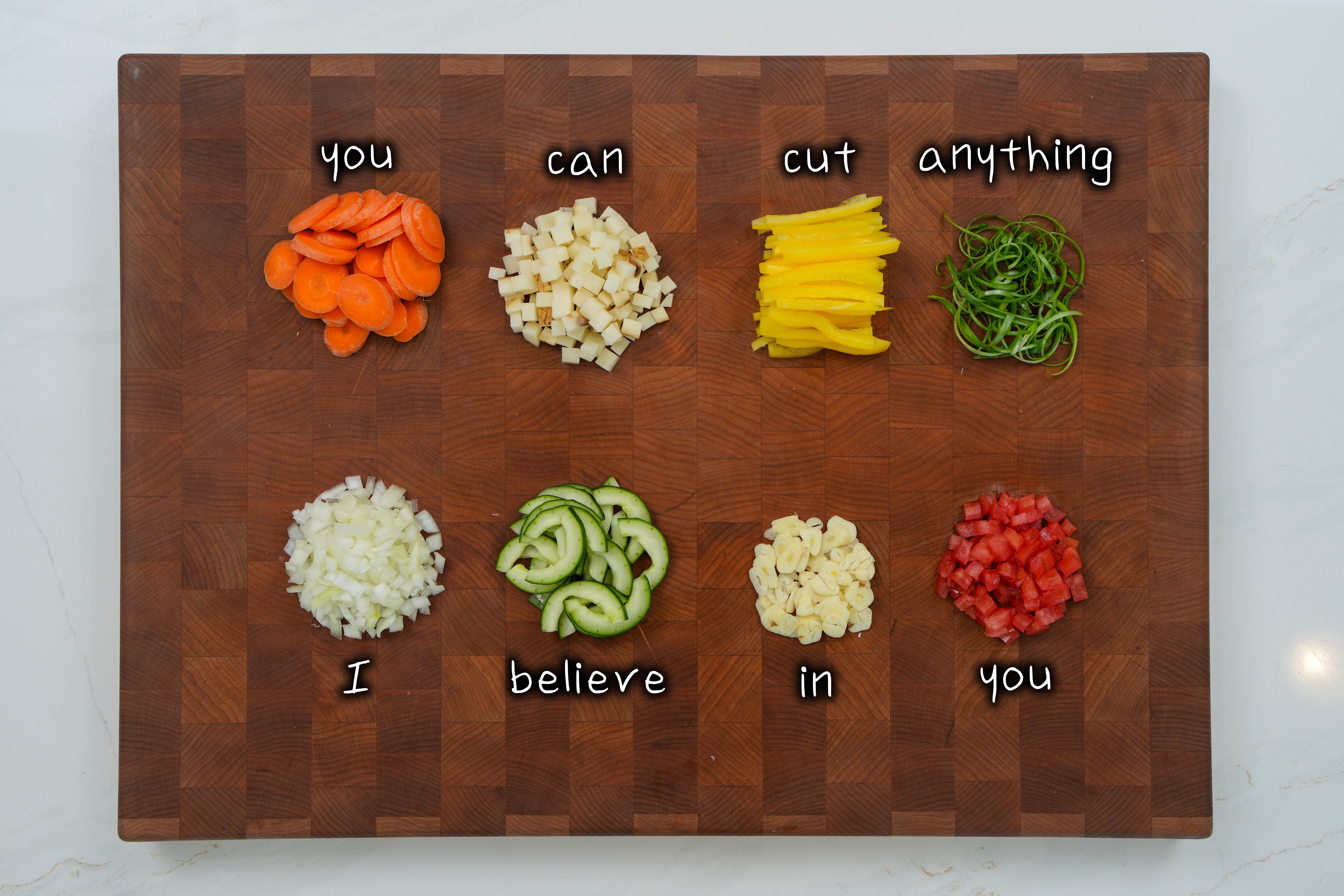
You shouldn’t need to know French to know how to cut vegetables. With nearly a hundred different knife cuts, it can be extremely intimidating. But in reality you don’t need to know all of them to make a delicious meal for you and your family.
Want a visual? Please check out my full video on how I cut each one!
Apron Restock Alert!!
This is a limited restock, so get yours before it is too late! Click here to get yours!
What you get with a paid subscription to the Not a Chef newsletter:
All my recipes, fully unlocked—every single one.
Direct access to me for questions—no judgment, even if your last attempt was a “kitchen experiment.”
Community chat access to swap tips, share photos, and celebrate (or commiserate over) your cooking wins.
Ability to comment on any post—your insights, questions, and feedback are always welcome.
On behalf of myself and my family, thank you for subscribing—whether you’re reading along for free or supporting me with a paid subscription, I truly appreciate you. Your support keeps this work going and makes creating recipes, guides, and resources for you possible.
There are about 100 different “proper” knife cuts in cooking.
Brunoise, Julienne, Batonnet…..blah blah blah…
You don’t need to know any of them to make good food.
What you do need are three simple rules that apply to every vegetable you’ll ever cook. If you follow these, you can cut anything for any dish — confidently, safely, and on purpose.
Before we get into vegetables, two quick things:
How to hold your knife 🔪:
Pinch the blade with your thumb and index finger
Wrap the rest of your hand around the handle
How to hold the food 🍽️:
Curl your fingers into a loose claw
Knuckles forward, fingertips tucked
(We are not sacrificing tips today.)
Alright. Let’s cook 🔥
The 3 Essential Rules of Cutting Vegetables 🔪🥒
1. Even Cuts
I don’t care what shape the vegetables are.
I do care that they’re roughly the same size.
Even cuts = even cooking.
Uneven cuts = some burnt, some raw, some sad.
Thickness controls cook time more than shape ever will.
2. Cut for How You’re Cooking It
High heat? Smaller pieces will cook all the way through without burning.
Low and slow? Smaller pieces melt away but bigger pieces will stay intact and tender.
Your knife work should match the heat and method.
3. Cut for How You Want It to Eat
Do you want texture? Bite? Crunch?
Or do you want the vegetable to disappear into the dish?
Same vegetable. Totally different result.
The cut decides that.
The Vegetables 🥕🥦🥬🧅🌽🥔🍆
Below are the most common vegetables people cook, with the most common cuts.
🥕 Carrot
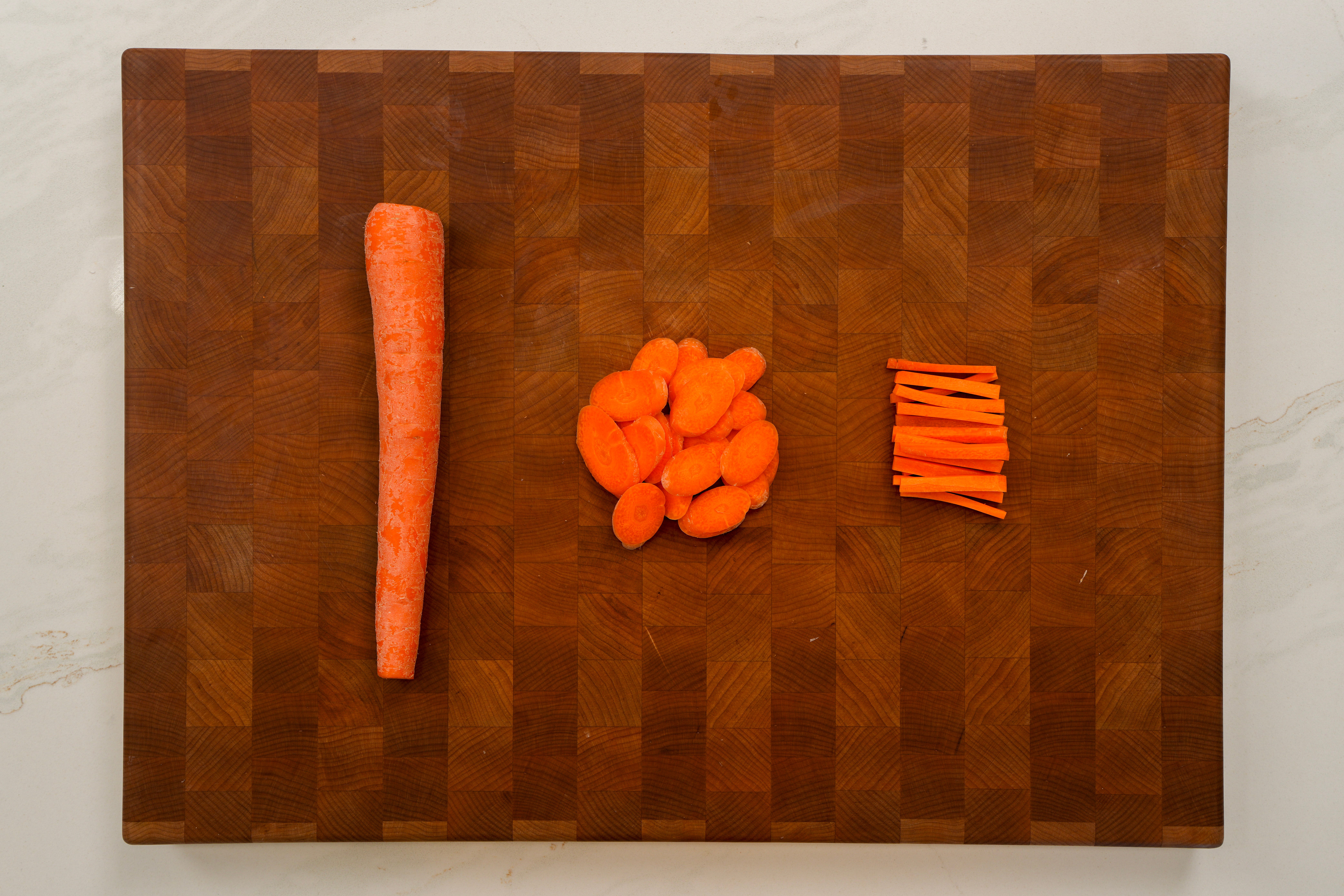
Bias coins → stir fry, quick sauté
Thick batons → roasting, braising, sheet-pan meals
Bias Coins
Wash the carrot.
Peel if you want. If the skin is clean, you can leave it on.
Trim off both ends.
If the carrot rolls, slice a thin plank off one side so it sits flat.
Hold your knife at a 30–45° angle.
Slice across the carrot into even bias coins.
Check thickness as you go and adjust if needed.
Thick Batons
Wash and peel if desired.
Trim off both ends.
Cut the carrot into 2–3 inch sections.
Square off each section by trimming the rounded sides until you have a rectangle.
Cut the rectangle lengthwise into thick planks.
Stack planks and slice lengthwise into even batons.
Trim any pieces that are noticeably thicker.
🌿 Celery
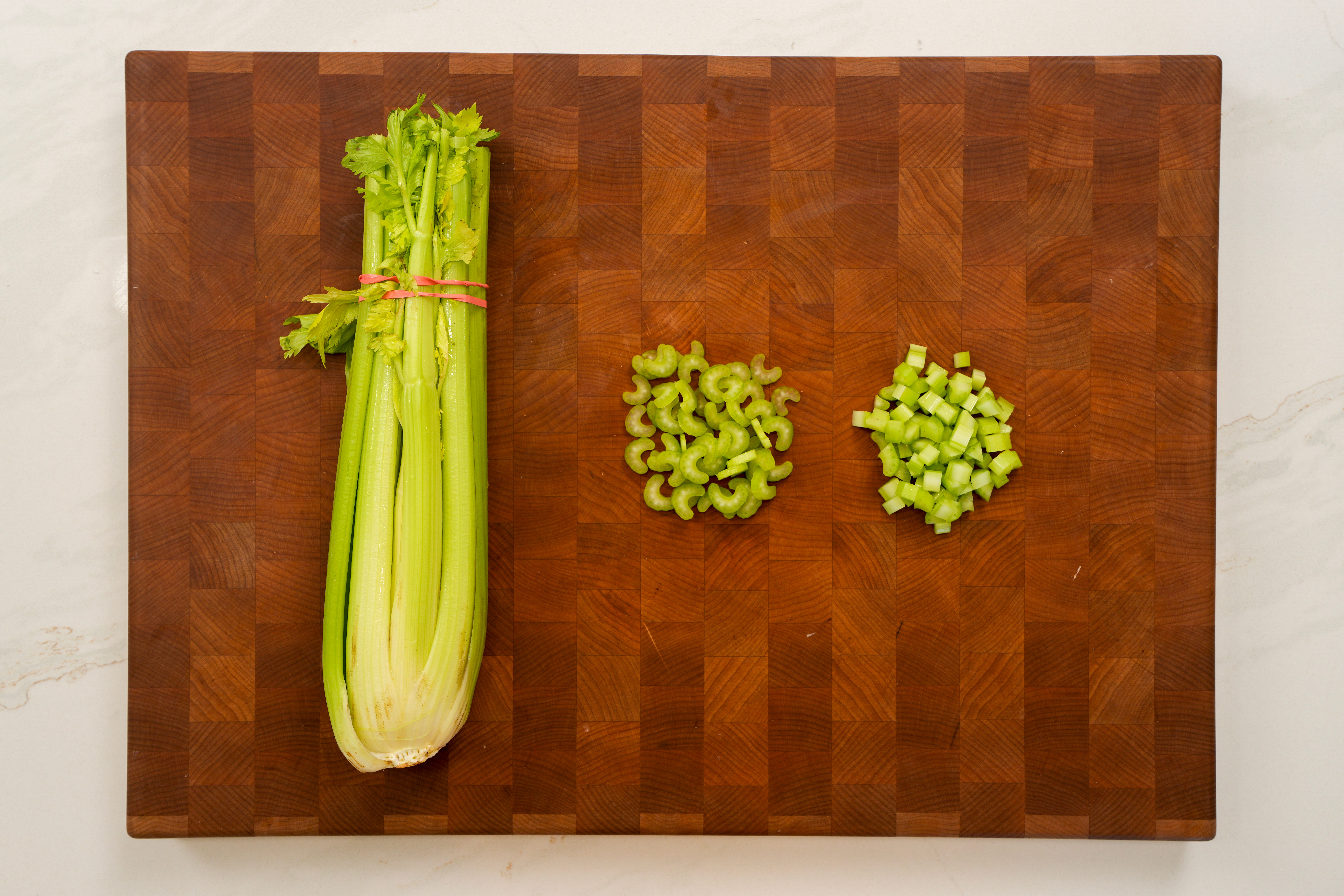
Thin slices → soups, stews, braises
Dice → tuna salad, chicken salad, cold dishes
Thin Slices
Pull each celery rib away from the base instead of cutting straight through.
Rinse well under cool water — dirt loves to hide in those crevices.
Trim 1–2 inches off the bottom and trim the top as well.
Lay the ribs flat and slice crosswise into thin, even pieces.
Thinner slices break down faster and leave you with less stringiness if you get one in a bite.
Dice
Separate the ribs, rinse well, and trim the ends.
Cut the ribs into 3–4 inch sections.
Slice each section lengthwise into strips. A good rule of thumb is to split each rib into four.
Line up the strips and cut crosswise into small, uniform dice.
🥔 Potato
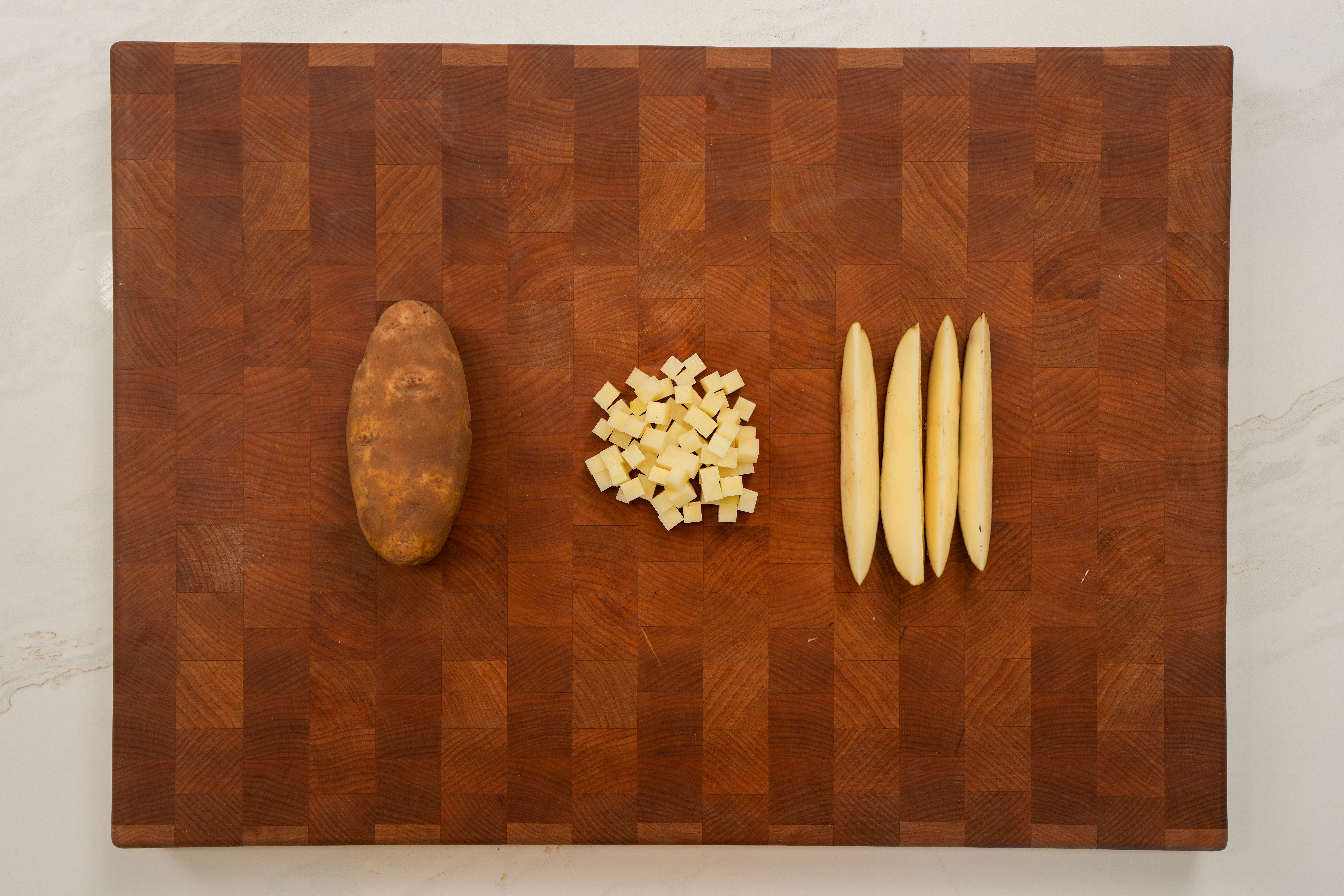
Dice → soups, hashes
Wedges → roasting
Dice
Wash the potato. Washing is not optional.
Peel if you want. Potato skins are great — this comes down to application and personal preference.
Cut a thin sliver lengthwise off one side so the potato can rest flat.
Slice the potato lengthwise into even slabs.
Lay one slab flat at a time. Potatoes are slippery — don’t rush this.
Cut the slab into sticks the same thickness as the slab.
Take 2–3 sticks at a time and cut crosswise into cubes.
Wedges
Wash and peel if desired.
Cut the potato in half lengthwise and lay each half flat.
Cut lengthwise at about a 45-degree angle to form wedges.
Adjust wedge size to your preference and slow down on the last cut.
Pro tip:
If you’re not cooking potatoes right away, store them in cool water to prevent oxidation and browning.
🫑 Bell Pepper
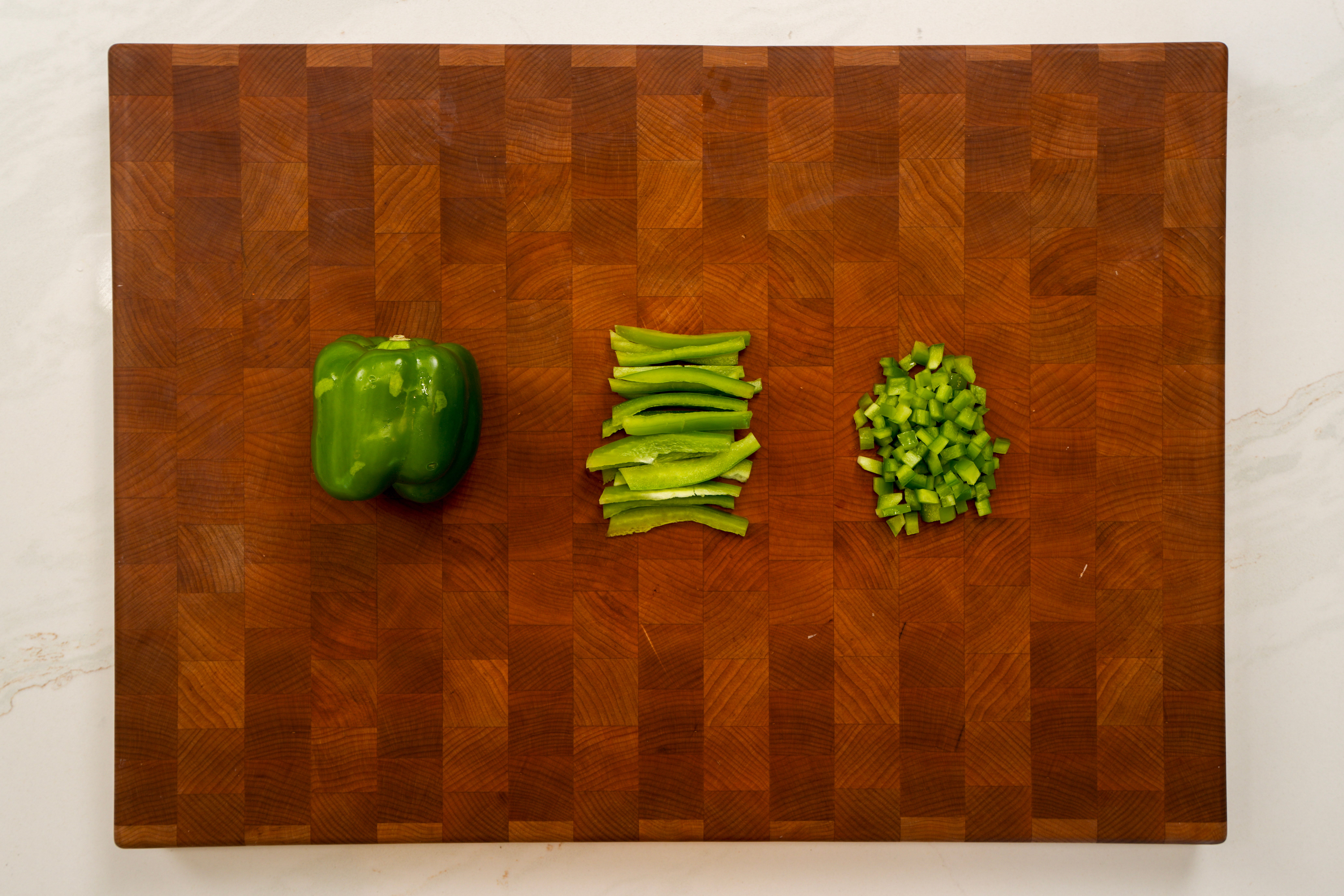
Strips → stir fry, fajitas
Dice → sautés, sauces
Strips
Wash the pepper under cool water.
Slice off the top and bottom and set them aside — they’re still usable.
Stand the pepper upright and cut down one side to open it like a book.
Use your hands to remove the seeds and white ribbing.
Lay the pepper flat and slice into even strips.
Dice
Follow the strip steps above.
Gather 3–4 strips at a time.
Cut crosswise into a dice the same thickness as the strips.
🥦 Broccoli
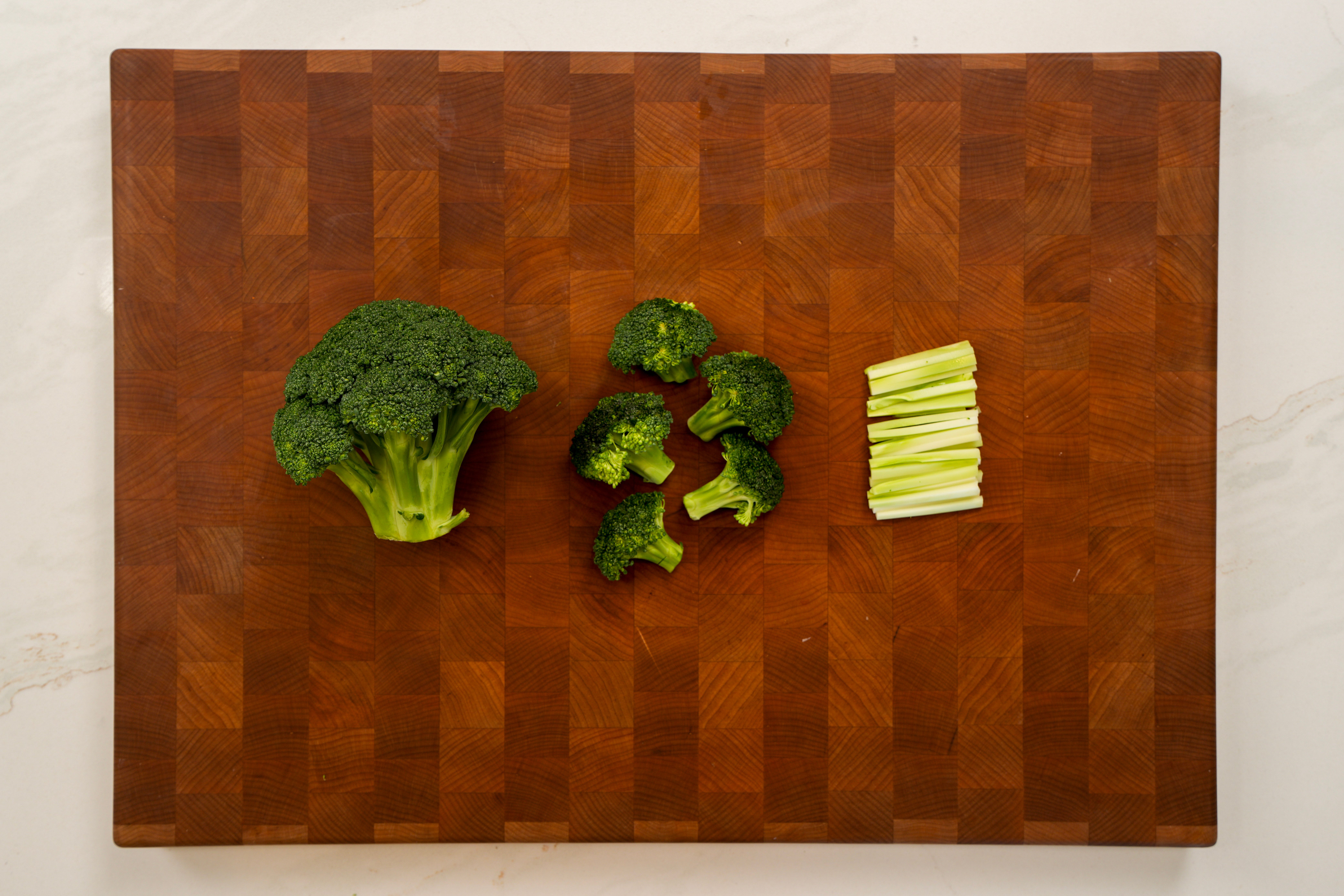
Florets → roasting, stir fry
Stem pieces → sauté, stir fry
Florets
Rinse the broccoli under cool water.
Flip the head upside down.
Using a small knife, cut each floret off close to the stem — it shouldn’t take much force.
Larger florets can be split lengthwise at the base and pulled apart.
Make sure each floret has enough stem attached so it holds together while cooking.
Stem Pieces
Trim and discard the bottom ¼ inch of the stem.
Lay the stem flat and trim off the tough outer layer.
Slice into discs no thicker than ¼ inch or
Slice lengthwise into planks, lay flat, and cut again into matchsticks.
🧅 Onion
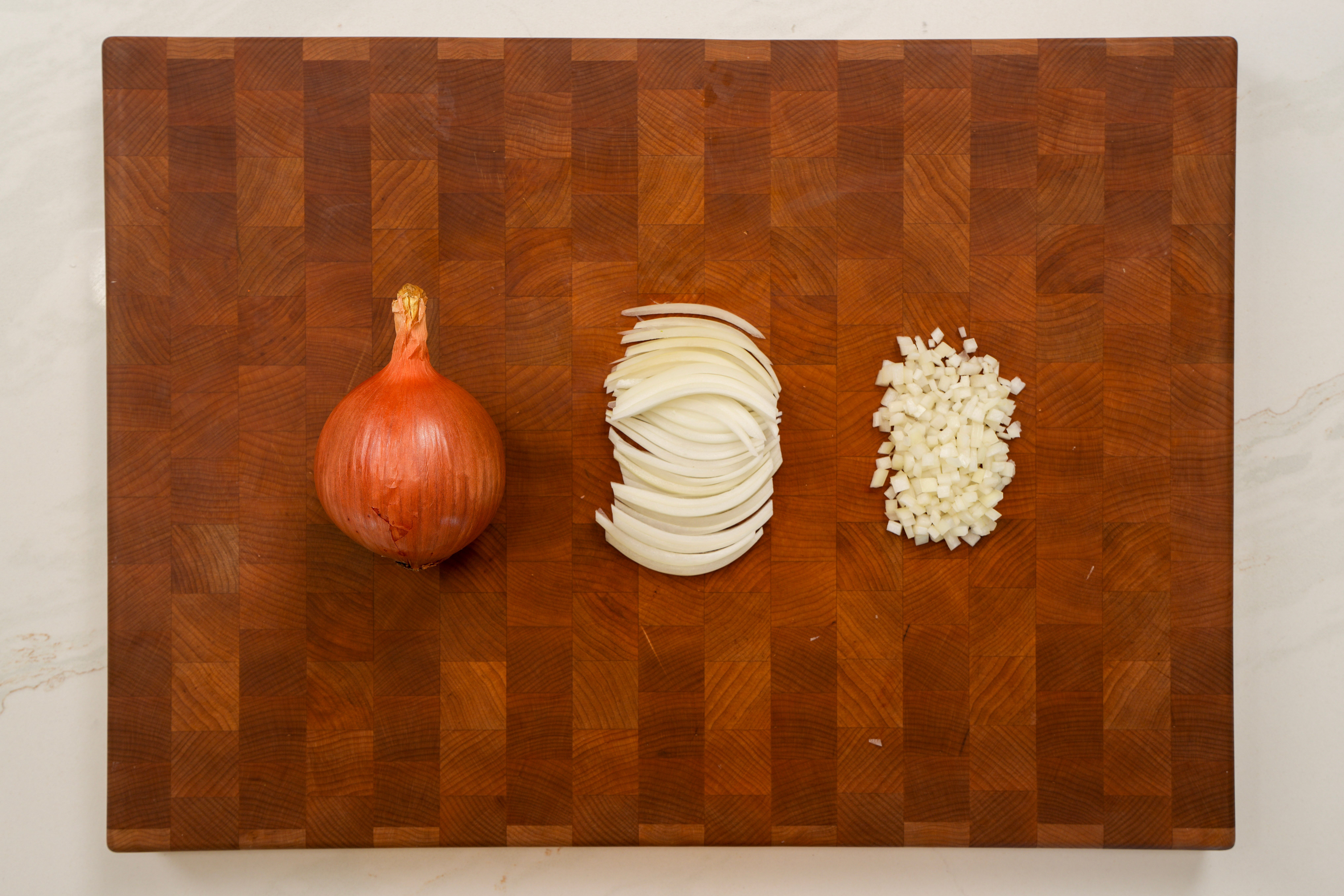
Slices → sauté, burgers
Dice → soups, sauces
Slices
Cut the onion in half from root to tip.
Lay each half flat and trim off the tip just enough to expose the inner layers.
Peel back the outer skin. Remove layers until you reach clean onion — they’re not always even.
Two ways to slice, depending on how you want it to eat:
For onions that cook down and get soft, continue slicing 90° from the root, the same direction you trimmed the tip.
For onions with more bite and structure, trim the root the same way as the tip, rotate the onion, and slice around the circumference.
Angle your knife about 10 degrees and slice inward, like cutting potato wedges.
Rotate or flip the onion as needed so your hand stays in a strong, safe position.
Dice
Cut the onion in half, trim the tip, and peel the skin — leave the root intact.
Make evenly spaced cuts from root to tip, stopping short of cutting through the root.
Rotate the onion 90 degrees.
Slice crosswise at the same thickness to create dice.
Smaller dice will disappear and cook away more. Bigger dice will stay present.
🥦🤍Cauliflower
Yes, I know that is a broccoli emoji - I’m starting a petition for a cauliflower emoji asap.
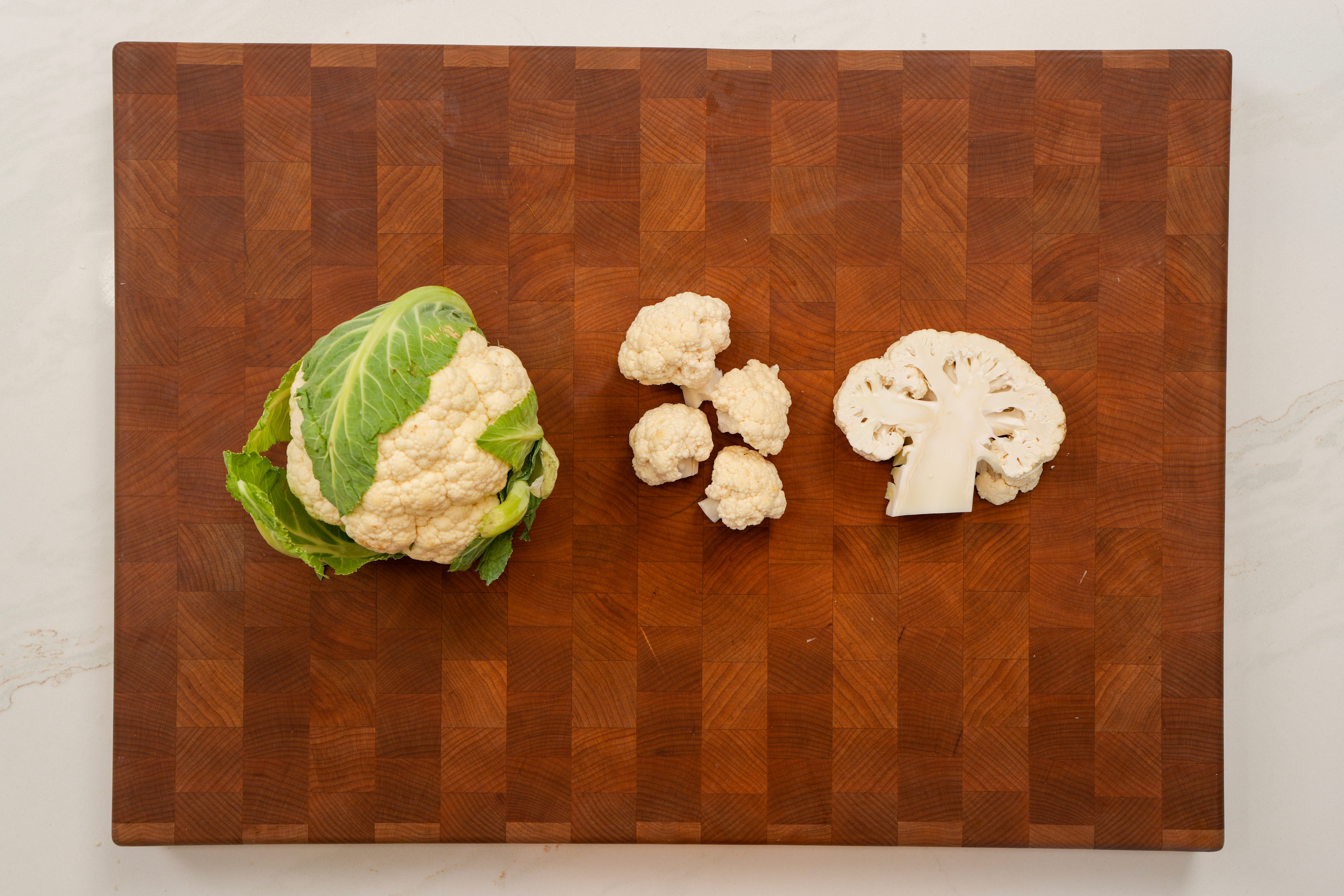
Florets → stir fry, curry
Steaks → roasting, grilling
Florets
Remove the leaves and rinse under cool water.
Using a small knife, cut large florets off the core.
Break those florets down the same way you would broccoli.
Cut into smaller, more manageable pieces as needed.
Steaks
Trim leaves and rinse under cool water.
Stand the cauliflower upright.
Cut thick slices straight down through the core to create steaks.
🥒 Zucchini
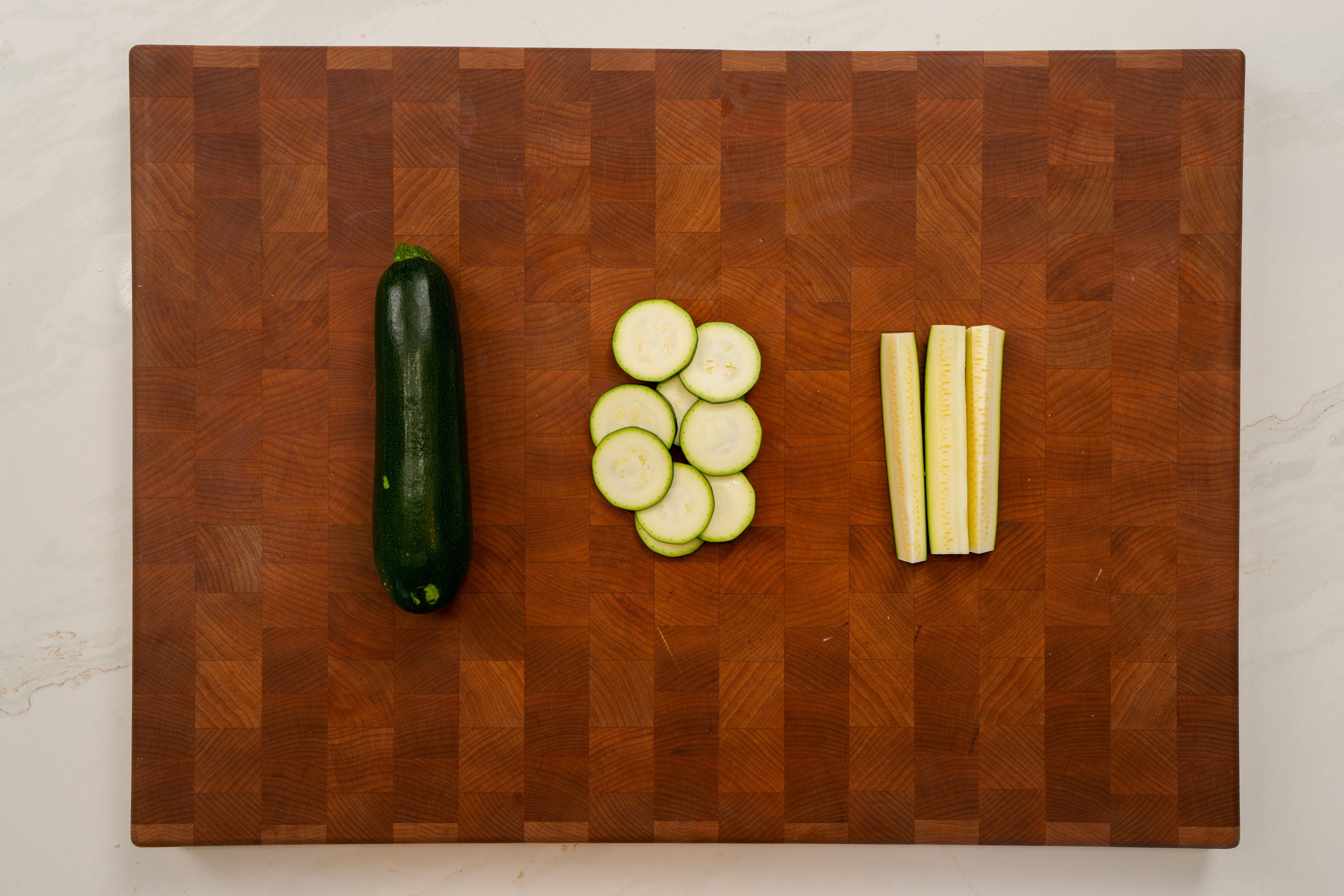
Thin slices → sauté
Spears → grilling, roasting
Thin Slices
Wash the zucchini.
Cut the tips off both ends.
Slice into thin disks.
That one’s pretty simple.
Spears
Wash the zucchini and trim both ends.
Lay it flat and pinch one end.
Cut straight down the center lengthwise, starting at the end you’re pinching.
Lay each half flat and cut lengthwise again.
You should end up with long spears.
🍄 Mushroom
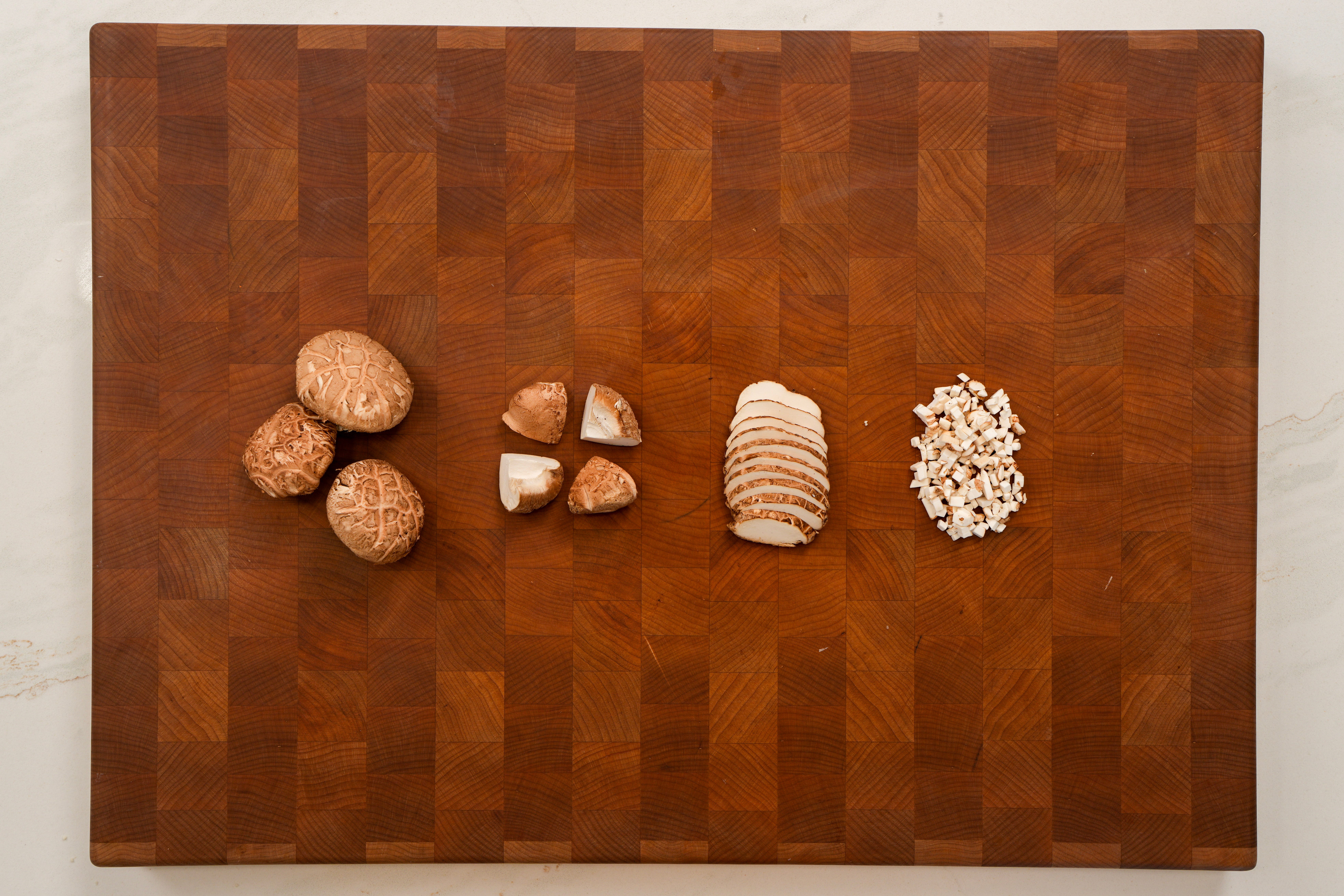
Quartered → roasting
Sliced → pasta, stir fry
Diced → sauces
Cleaning
Clean mushrooms using minimal water.
Use a paper towel to gently rub dirt off the caps.
Remove stems if you want — I almost always do, but that’s personal preference.
Quartered
Lay the mushroom flat.
Cut it in half.
Cut those halves in half.
Plain and simple.
Sliced
Lay the mushroom flat.
Starting at one edge, cut into thin slices all the way across.
Diced
Slice the mushrooms thin.
Lay slices flat and cut into matchsticks.
Group matchsticks together and cut into dice the same thickness.
🍅 Tomato
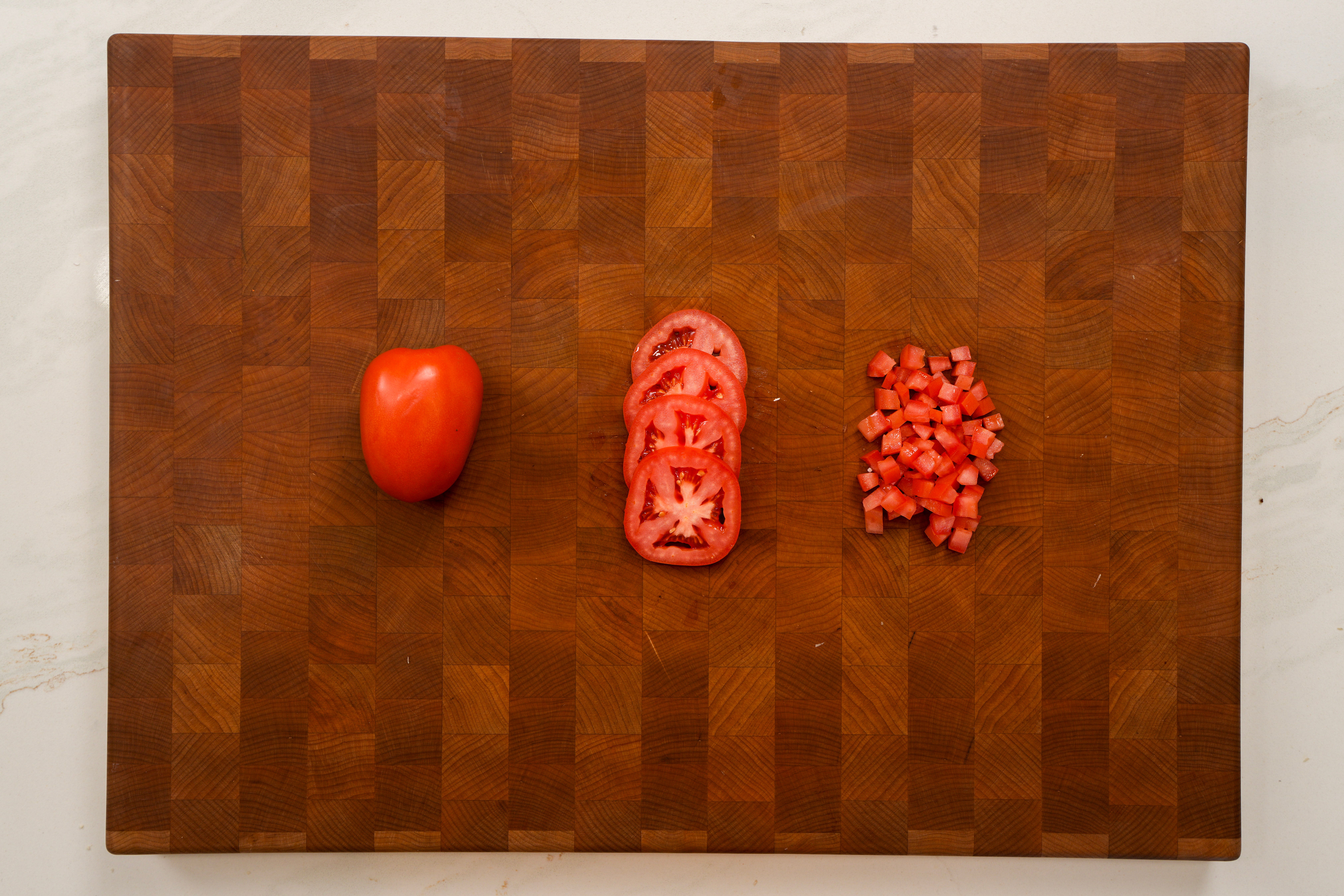
Rounds → sandwiches, salads
Dice → salsa, sauces
Rounds
Wash the tomato.
Lay it on its side or upright — whichever feels most stable.
Using a very sharp knife or a bread knife, slice ¼–½ inch thick.
If your knife isn’t sharp, don’t force it.
Salt your tomato slices before eating.
Dice
Wash the tomato.
Cut off the top and bottom.
Stand it upright and slice down one side to open it.
Scrape out the watery interior with a spoon or knife.
Flatten the outer flesh, cut into strips, then dice the same thickness.
🧄 Garlic
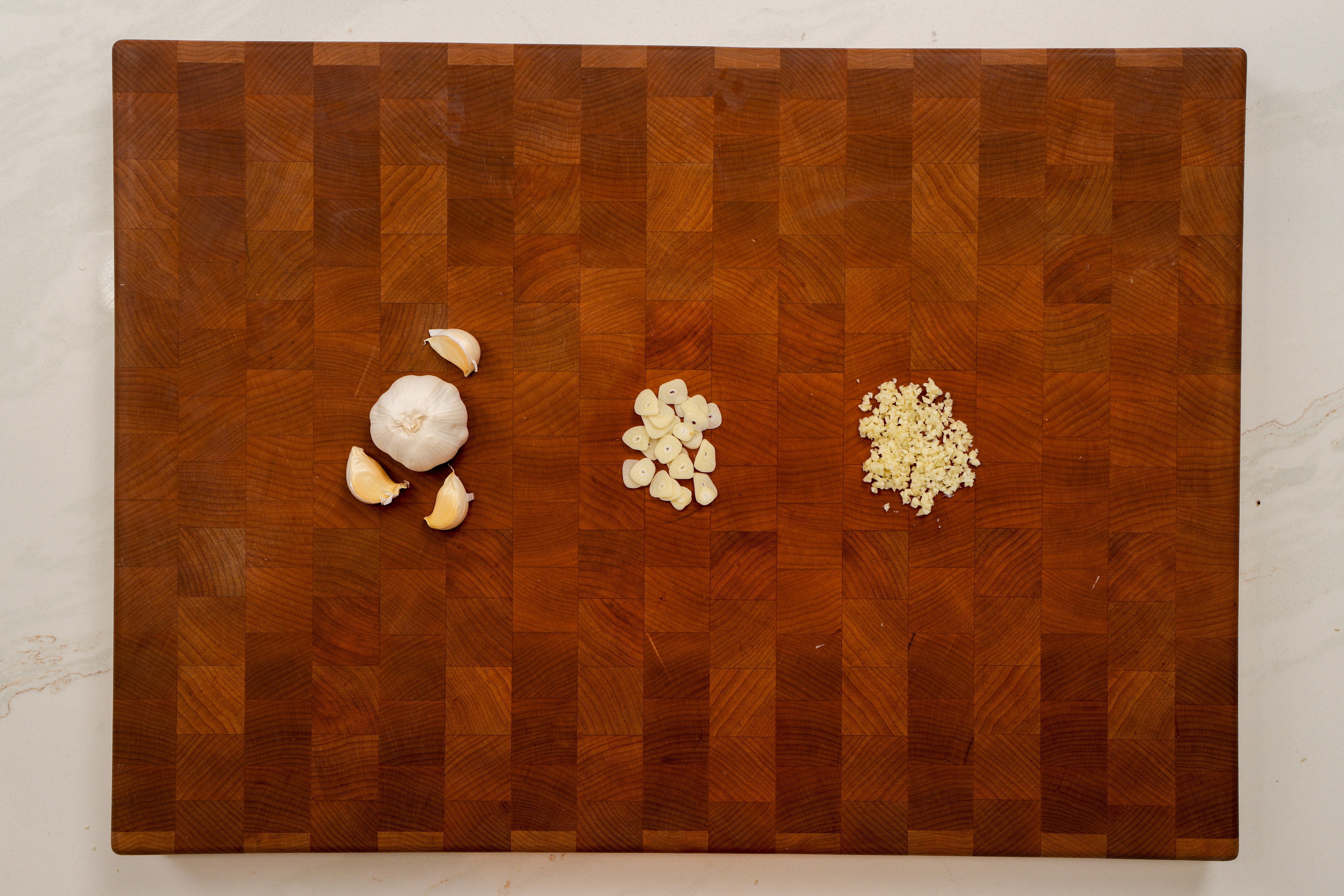
Sliced → garlic oil
Minced → stir fry base
Peeling
Soak unpeeled cloves in water for 10–15 minutes or
Peel from the root end if you’re short on time.
Sliced
Lay the clove on its flattest side.
Slowly drag the tip of your knife through the clove into thin slices.
This isn’t about skill — it’s about patience.
Minced
Smash the clove with a bench scraper or pot. - Do not use the side of your knife.
Remove the peel.
Rock your knife over the garlic, scraping it back into the pile as needed.
🌱 Green Onion

Bias slices → stir fry
Thin curls → garnish
Bias Slices
Rinse under cool water and let dry upside down.
Group 2–3 stalks together.
Slice at a 45-degree angle from the tips down to the root.
Green parts are better for garnish, whites are better for cooking — use them however you like.
Thin Curls
Rinse and dry.
Cut green parts into 3-inch sections.
Stack, flatten, and slice lengthwise as thin as possible.
Soak in ice water for at least 5 minutes.
Pat dry and watch them curl.
🫚 Ginger
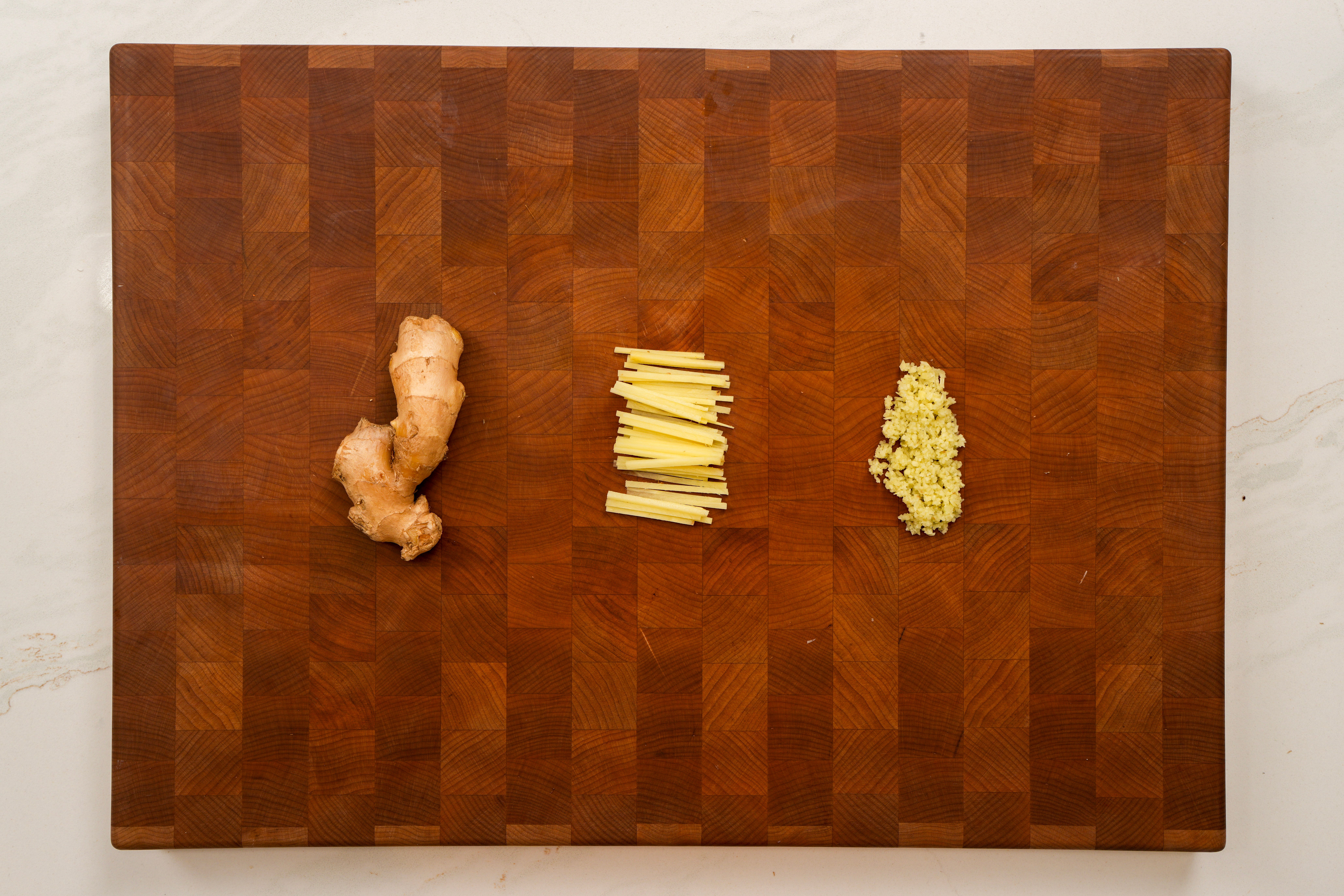
Matchsticks → stir fry texture
Minced → sauces, marinades
Matchsticks
Peel with a spoon.
Square into chunks.
Slice into planks.
Cut planks into matchsticks.
Minced
Peel and slice against the grain into thin disks.
Lay on a sturdy cutting board (not plastic).
Move your knife off the board.
Smash with a small pot.
Rock your knife to finish.
Smashing is faster. Also more fun.
🥬 Cabbage

Chunks → braising
Shreds → slaw, stir fry
Chunks
Remove outer leaves.
Cut in half, then quarters.
Remove the core at an angle.
Cut into chunks about two-finger thickness.
Shreds
Quarter and core the cabbage.
Slice straight down into thin shreds.
🥒 Cucumber
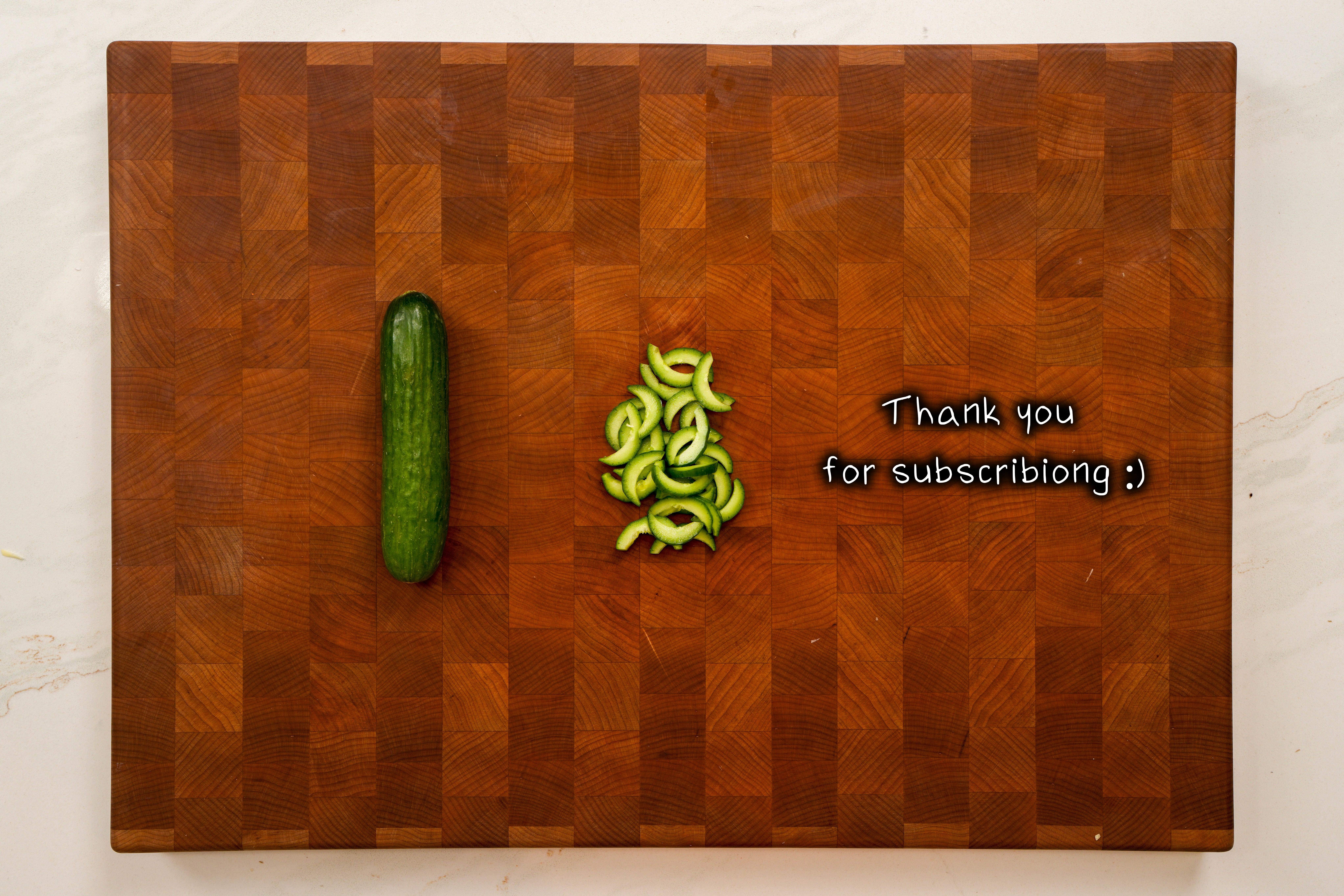
Gutted half-moons → salads, pickles
Gutted Half-Moons
Rinse under cold water.
Trim both ends.
Cut lengthwise in half.
Scoop out the seedy center with a spoon.
Lay flat and slice crosswise into half-moons.